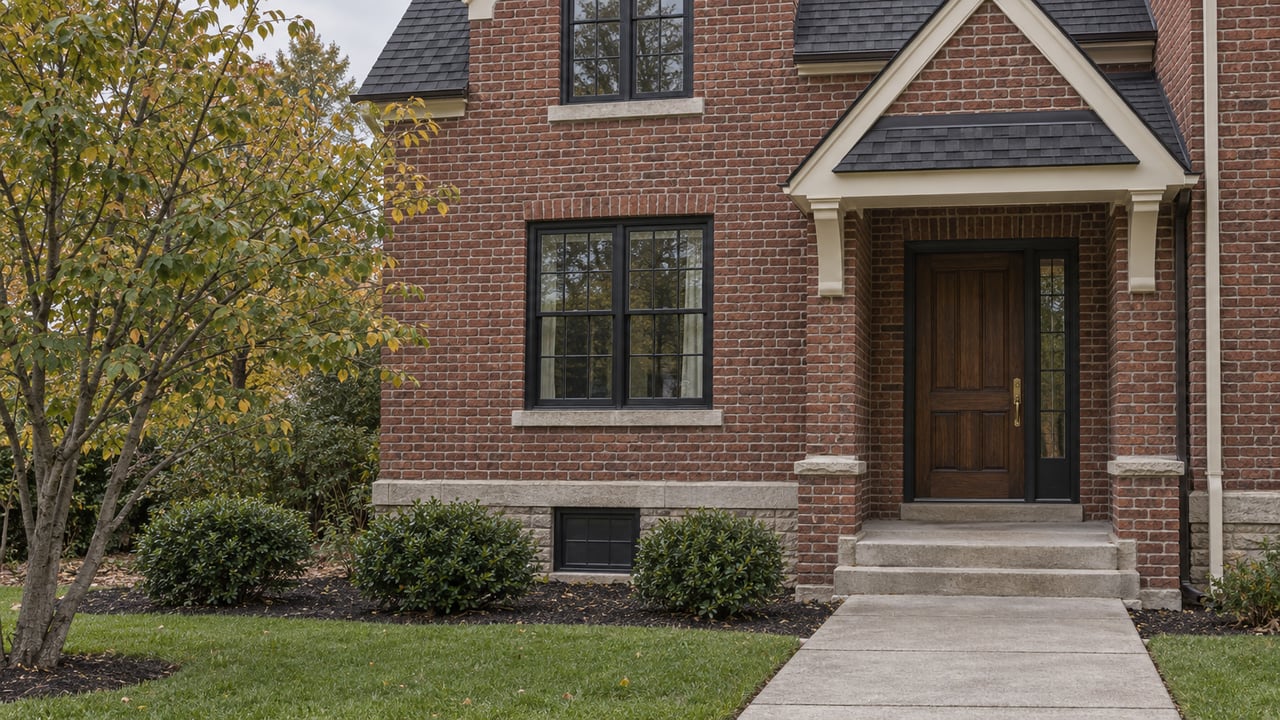
The seller property disclosure on a 1928 Dundee foursquare can come back with every box marked "no issues known" and the buyer can still walk into a $15,000 rewire two weeks before closing. Nothing on that form was false. The seller genuinely didn't know the attic still had live knob-and-tube wiring behind the insulation, because nobody had opened that attic in decades. That's the shape of the risk buyers underestimate in Omaha's older neighborhoods. The disclosure form isn't thin because sellers are hiding things. It's thin because Nebraska law only asks them to report what they actually know, and in a Dundee or Benson home built before 1960, plenty of the systems that matter most were installed before the current owner, or anyone alive today, ever saw the property.
What the disclosure form actually promises
Nebraska's Seller Property Condition Disclosure Statement is required under state law for most residential sales of one to four units. It asks sellers to describe the condition of the roof, foundation, electrical, plumbing, heating and cooling, water supply, and sewage systems, along with any known hazardous conditions. That sounds thorough, and for a lot of the form it is. The statute governing it, Neb. Rev. Stat. §76-2,120, spells out exactly what has to appear at the top of the document, and the language is specific: the statement is "not a warranty of any kind" by the seller or any agent, and it should not be treated as a substitute for an inspection.
The standard runs on knowledge, not certainty. A seller who genuinely didn't know about a defect isn't liable for leaving it off the form, and Nebraska courts have reinforced that the standard is a knowing one. In Burgess v. Miller, decided in 2001, the Nebraska Court of Appeals confirmed that a violation of the disclosure statute has to be done knowingly. A seller who never had the sewer line scoped and never opened the attic isn't concealing anything by leaving those boxes blank. They're just answering honestly about a house they've never had reason to fully see inside.
That distinction matters more in some Omaha neighborhoods than others.
Where the gap actually shows up
Three systems account for most of the surprises that turn up after an offer is accepted, and all three share the same trait: none of them are visible during a normal walkthrough.
Wiring. Homes in Dundee, Benson, Field Club, and other pre-1960s pockets of the city commonly still carry some of their original electrical work. Active knob-and-tube in an attic doesn't just fail an inspection, it can prevent a buyer from getting standard homeowner's insurance coverage at all, which stalls financing before the deal ever gets to closing. A full rewire typically runs $15,000 to $20,000. A seller who's lived in the house for twenty years without ever pulling insulation back in the attic has no way to know that wiring is there, so it never makes it onto the disclosure.
Sewer laterals. Clay, cast iron, and orangeburg pipe were standard practice for decades, and mature street trees in these same neighborhoods have had a long time to find the joints. A camera inspection is the only reliable way to see root intrusion or a bellied section before it becomes a backup. When a lateral has actually collapsed, repair costs exceed $10,000, and if a seller refuses to credit or repair it after the fact, buyers walk. None of that shows up on a disclosure form unless the seller has already had the line scoped, which most owners of a functioning sewer system never do.
Radon. Omaha sits in Douglas County, which the EPA classifies as Zone 1, its highest radon-potential designation. Statewide data from Nebraska's Department of Health and Human Services shows more than half of tested homes come back above the EPA's action level of 4 picocuries per liter, against a national average closer to 6 percent. The geology behind that number is specific to this part of the state. Nebraska sits on wind-deposited loess soil layered over uranium-rich bedrock, and that soil is porous enough to let radon gas move easily from ground to foundation, a pathway that older block foundation walls make even easier through their mortar joints. Radon disclosure in Nebraska is required if testing has been done. If it hasn't, there's nothing to disclose, even though the odds in this market are close to a coin flip.
Why this isn't really about older neighborhoods being risky
It would be easy to read all this as a case against buying in Dundee or Benson, but that's not the mechanism. Newer construction west of 168th Street carries its own set of surprises, mostly around manifolds, undersized closets built for tankless units, and the occasional slab leak. The difference is that those systems are newer and better documented, so there's less daylight between what a seller knows and what's actually true.
The older housing stock in neighborhoods like Aksarben, Countryside, and Blackstone doesn't have that advantage. A house built in 1938 has had multiple owners, multiple decades of code changes, and multiple systems that were perfectly normal to install at the time and are now the exact things an inspector flags. The seller standing in front of you at closing isn't the person who ran that wire or laid that pipe. They inherited a house and a disclosure form that can only reflect what they've personally observed, which for a sewer line running under the yard or wiring sealed behind plaster since the Truman administration, is often nothing at all.
What this means at the negotiating table
For buyers looking at homes in Omaha's older neighborhoods, the practical response is to stop treating the disclosure form as the finish line and start treating it as the starting point. A sewer camera scope, a licensed review of the electrical panel and any visible wiring, and a radon test are worth building into the offer regardless of what the seller marked on the form, because a clean disclosure only tells you the seller hasn't found a problem. It doesn't tell you one isn't there.
For sellers, the incentive runs the other direction but points at the same fix. A pre-listing inspection, which typically runs $400 to $600, surfaces the radon reading, the sewer condition, and the wiring status before a buyer's inspector does. That means either addressing the issue on your own terms or pricing the home with it already factored in, instead of renegotiating from a weaker position after an inspection report lands mid-contract. Sellers who get there first tend to keep the deal moving instead of watching it stall over a discovery nobody saw coming, including them.
None of this is a reason to avoid an older Omaha home. It's a reason to treat the disclosure form for what the statute actually says it is, a snapshot of what one person knows, not a guarantee of what's true.
A few common questions
Does a seller have to test for radon before listing a home? No. Nebraska's disclosure obligation applies to known conditions, and radon only becomes a known condition once a test has been run. A seller who has never tested has nothing to report, even in a Zone 1 county like Douglas County.
What happens if a buyer finds something after closing that wasn't on the disclosure form? Nebraska law only creates liability when a seller knowingly failed to disclose something they were aware of. A defect the seller genuinely didn't know about, like wiring behind an untouched attic wall, generally isn't grounds for a claim under the statute.
Do all Omaha homes built before 1960 have these issues? No single home is guaranteed to have any of them. The point isn't that every older property in Dundee or Benson has active knob-and-tube or a failing sewer lateral. It's that the age and construction era of these neighborhoods make those systems common enough that skipping the inspection is a bigger gamble than it looks like on paper.
If you're weighing an older home in one of these neighborhoods, or getting ready to list one, the Staci Mueller Group can walk through what a pre-offer scope or pre-listing inspection actually looks like for your specific address before you're staring down a surprise at closing.
